Find the stone. We'll design the piece around it.
Thousands of natural gemstones available to us through our cutting partners: sapphires, emeralds, rubies, tourmalines, tanzanite, aquamarine and more. Browse by type, shape, color and price, then send us the stone code and we'll confirm availability, get it in hand and design with you.
New to rubies? Read our ruby guide on pigeon's blood color, lab reports, heating and where rubies come from. About these stones and prices. This catalog is drawn from the inventory of our cutting and sourcing partners and refreshed regularly, so a stone may sell before we can confirm it. Prices are shown per stone in U.S. dollars, are estimates for the loose stone only, and exclude setting, shipping and any applicable duties or sales tax. Carat weights for calibrated sizes are averages. Reserve any stone with a 50% deposit: we confirm it in hand with our partner, photograph it for you, and invoice the balance — or refund the deposit in full if it has sold. Treatments are disclosed as reported by the supplier.
Pigeon's blood rubies, lab reports and what "residue" means
What is a "pigeon's blood" ruby?
"Pigeon's blood" is a trade term for the finest red in ruby: a vivid, saturated, slightly purplish red that is neither too dark nor too light, and that glows under daylight and UV because of its strong red fluorescence. The name is traditionally tied to rubies from Mogok, Myanmar (Burma). It is a description of color, not a measurable standard, so one seller's "pigeon's blood" can be another's "very good red." That is why we point you to the lab report and not just the phrase.
Why is it so rare?
Very few rubies combine all of the things buyers value at once: that exact color, good transparency, and size. Fine rubies become much rarer, and much more valuable, above one carat, and a clean, vivid stone of three carats or more is a true rarity. Fine rubies are scarce to begin with, and stones with a clear lab record are harder still to find, which is why collectors seek them out.
Why a report from a respected lab matters
Two rubies that look alike can differ in price many times over, depending on where they come from and whether they have been treated. You cannot tell either from a photo, or reliably with the eye. Independent gemological laboratories such as GIA, GRS, Gübelin and SSEF test the stone and state its identity, its origin and its treatment. A report from one of them gives you a neutral record of what you are buying, makes the stone easier to resell or insure, and protects you from guesswork. Keep in mind that an origin statement is an expert opinion based on testing, and not a guarantee. Certified stones are marked in our catalog, and you can ask us for the report on any of them.
Heated and unheated rubies
Heating is the most common and accepted treatment for ruby. Gem rough is heated to improve color and clarity, and the result is stable and permanent. A natural ruby with no sign of heating is far rarer, and fine unheated stones command a large premium. Both are real, natural rubies. What matters is that the treatment is disclosed, and we always state it.
What does "residue" mean?
Heating can leave behind tiny traces of glassy material in microscopic fissures and cavities that reach the surface of the stone. This is called residue. When GIA reports a heated ruby, it states how much residue it found, from minor to moderate to significant. In general, minor and moderate residue describe a stone that is still a heated ruby, and the amount is a factor in value and in how the stone should be cared for. Significant residue is more serious and is priced accordingly. An unheated ruby has no heating residue, because it was never heated; a lab report on an unheated stone will say that it shows no indications of heating.
Caring for a heated ruby
Clean with mild soap, warm water and a soft brush. Avoid ultrasonic cleaners, steam and harsh chemicals, especially for stones with residue, and have settings checked regularly.
How color shapes a ruby's value
Color is the biggest single factor in a ruby. The finest stones show a vivid, saturated red with a lively glow. If the red is too light it reads as pink, and if it is too dark the stone loses brilliance. A secondary hue, such as purple, also changes how a ruby is judged.
These swatches are illustrations only, and a screen cannot show a gemstone's true color. Color is judged in daylight or in person, so ask us for a daylight video of any stone you are considering. Price depends on color together with clarity, transparency, origin, size and treatment, so ask us for a quote on a specific stone.
Where rubies come from
Rubies are mined on several continents, and where a ruby formed affects its color. The deciding factor is the rock it grew in. Rubies that form in marble, as in Burma, contain very little iron, so they tend to show a pure red with a strong red glow. Rubies from iron-rich rock, as in Thailand or much of East Africa, can look darker or show a purple, orange or brown undertone, because iron softens that glow. These are tendencies, not rules: every source produces fine stones and ordinary ones.
| Photo | Source | Typical look | Known for |
|---|---|---|---|
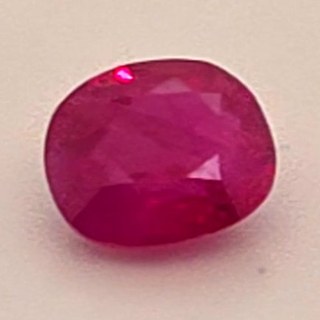 Our 3.03 ct Burma ruby | Burma (Myanmar) · Mogok | Vivid, pure red with strong red fluorescence | The classic source of “pigeon’s blood” rubies, and historically the most valued. Fine Burmese stones are now scarce. See our 3.03 ct Burma ruby, which GIA describes as “Pigeon’s Blood.” |
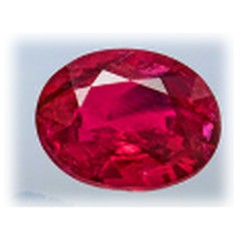 Mong Hsu ruby | Burma (Myanmar) · Mong Hsu | Red, often with a blue or purplish core before treatment | Mostly commercial-quality stones, and usually heated. |
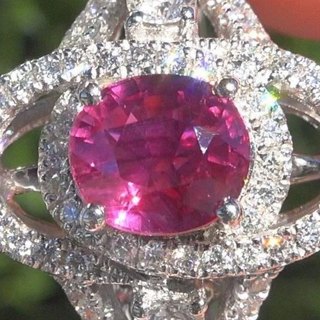 Our 2.2 ct Mozambique ruby ring | Mozambique · Montepuez | Red to purplish red | Discovered in 2009 and now one of the world’s main sources. Prized for clarity, and a source of fine unheated stones. |
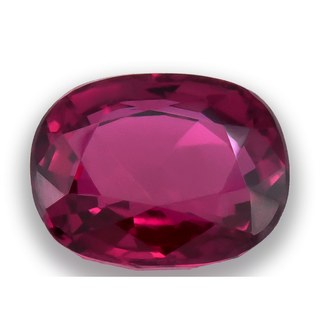 Thai ruby | Thailand & Cambodia | Darker red, sometimes brownish or purplish | Iron-rich stones with less glow. Thailand is also a leading center for ruby cutting, treatment and trade. |
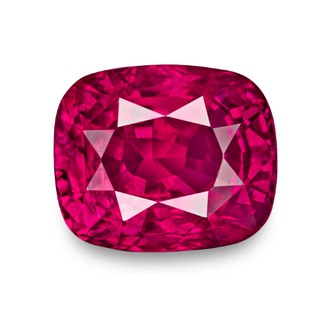 Sri Lankan ruby | Sri Lanka (Ceylon) | Lighter, bright pinkish red to red | Lively, well-crystallized stones. Lighter ones sit close to the line between ruby and pink sapphire. |
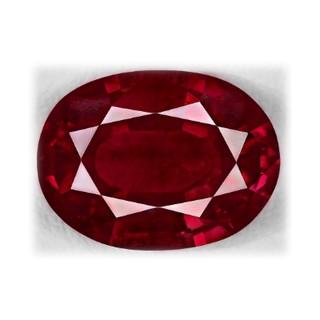 Madagascar ruby | Madagascar | Red to pinkish or purplish red | A growing source of fine-quality rubies. |
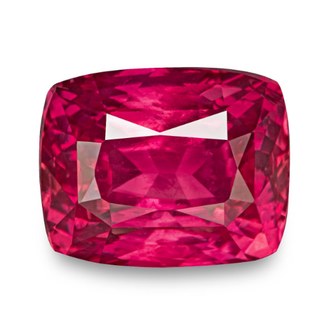 Tanzanian ruby | Tanzania & Kenya | Red, often with an orange or purplish undertone | Smaller deposits that produce occasional fine stones. |
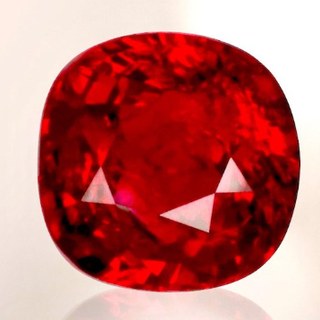 Vietnamese ruby 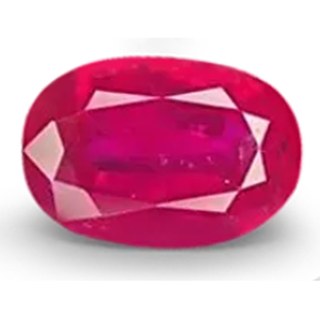 Afghan ruby | Vietnam, Afghanistan & Tajikistan | Red to pinkish red, often glowing | Marble-type rubies, like Burma’s, from smaller mines. |
Origin is confirmed by a gemological laboratory, never by eye. Labs such as GIA examine a ruby’s inclusions and trace-element chemistry, mainly its iron content, and compare it with reference stones of known origin. Even then, the evidence sometimes overlaps, and the lab will call the origin “inconclusive” rather than guess. Judge the stone in front of you, and use the report to confirm where it came from.