Emerald: Color, Origins, Treatments, Lab Reports and Care
Emerald has been treasured for thousands of years, from the mines of ancient Egypt to the Colombian stones that filled the treasuries of Europe and India. It is the birthstone for May and the traditional gem for 20th and 35th anniversaries. It is also the most commonly treated of the major gems, which makes knowing what you are buying especially important. This guide covers what an emerald is, what makes one valuable, where the finest come from, the treatments you will encounter, how to read a lab report, and how to care for an emerald so it lasts for generations.
What is an emerald?
Emerald is the green variety of the mineral beryl, the same species as aquamarine and morganite. Its color comes from traces of chromium, vanadium or both. Labs draw a line between emerald and the much less valuable green beryl: a stone that is too light or too yellowish, or whose color does not come from chromium or vanadium, is called green beryl rather than emerald. Where exactly that line falls can differ from lab to lab.
What makes an emerald valuable
- Color comes first. The most valued emeralds are a pure green to slightly bluish green, medium to medium-dark in tone, with strong, even saturation. Stones that are too light, too dark, too yellow or grayish are worth much less. The rarest are vivid, velvety greens that glow evenly across the whole stone.
- Clarity is judged differently. Almost every natural emerald has inclusions, often called its jardin (French for garden). Buyers expect them. What matters is whether they affect the stone's beauty and durability, and whether fissures reach the surface. An eye-clean emerald of fine color is exceptionally rare.
- Cut. The emerald cut, a rectangle or square with stepped facets and clipped corners, was developed for this gem: it shows the color in calm, broad planes and protects the corners from chipping. Ovals, pears, rounds and cabochons are also common.
- Treatment and origin, covered below, can change the price more than anything else.
Where emeralds come from
| Source | What it is known for |
|---|---|
| Colombia (Muzo, Chivor, Coscuez) | The classic source of the world's most prized emeralds: warm, pure to slightly bluish green with a soft, glowing quality. A Colombian origin report generally carries the highest premium. |
| Zambia | A major modern source. Typically a cooler, slightly bluish green, often cleaner than Colombian stones. |
| Brazil | Produces a wide range, often lighter and clearer stones, at more accessible prices. |
| Afghanistan (Panjshir Valley) | Fine stones that can closely resemble Colombian material. |
| Ethiopia, Zimbabwe, Russia and others | Ethiopia is a newer source of fine material; Zimbabwe is known for small, intensely saturated stones; Russia's Ural mines are a historic source. |
Origin is determined by a laboratory from the stone's inclusions and trace-element chemistry. It is an expert opinion, and labs occasionally disagree or call a stone inconclusive. Origin matters most for fine, larger stones.
Treatments: what every emerald buyer should know
Most emeralds have tiny surface-reaching fissures. For centuries, cutters have filled them with oil to make them less visible. Today, the great majority of emeralds sold have been clarity-enhanced in some way. That is normal, but the type and amount of enhancement must be disclosed, because they have a large effect on value and on care.
Oil (traditional and widely accepted)
Colorless oil, traditionally cedarwood oil, is drawn into surface-reaching fissures so they show less. It is the most accepted treatment, but it is not permanent: oil can slowly dry out or be removed by heat, solvents or ultrasonic cleaning, and the fissures become more visible. A professional can re-oil the stone.
Resins and polymers (accepted, but valued lower)
Some emeralds are filled with artificial resins, which can be more durable than oil but are less accepted by many collectors. Some resins can cloud or yellow with age. Hardened resins can be difficult to remove.
Unacceptable or undisclosed treatments
- Colored (green) oil or dyed fillers that add color the stone does not have. This is considered deceptive.
- Coatings and backings that make a pale stone look greener.
- Heavy fillers in badly fractured stones, which hide weakness and make the stone fragile.
How labs describe the amount of enhancement
Major laboratories describe clarity enhancement on a scale that typically runs from none through insignificant or minor and moderate to significant, and often state whether the filler is oil or resin. An emerald with no enhancement, or only insignificant enhancement, is rare and commands a large premium. A stone with significant enhancement should be priced well below one with minor enhancement of similar appearance.
Laboratory-grown emeralds and look-alikes
Laboratory-grown (synthetic) emeralds have been made for decades by flux and hydrothermal methods. They are real emerald in composition but worth a small fraction of a natural stone, and they can be very convincing. Imitations include green glass, green garnet or tourmaline sold as emerald, and doublets or triplets in which a thin green layer is sandwiched between colorless pieces. A gemologist or laboratory can tell them apart.
Reading an emerald lab report
For an emerald of any importance, look for a report that states:
- Identification: natural beryl, variety emerald (rather than green beryl or a laboratory-grown stone).
- Clarity enhancement: whether the stone is enhanced, the type of filler (oil or resin) and the degree (none, insignificant or minor, moderate, significant).
- Origin, for fine stones, especially if you are paying a premium for Colombian origin.
- The laboratory: for valuable emeralds, reports from GIA, AGL, SSEF, Gübelin or GRS are the most widely accepted. Our guide to lab reports explains the differences between labs.
- The date. Because oil can dry out or be replaced, an older emerald report may no longer describe the stone exactly as it is today. For a valuable emerald, a current report is worth having.
Caring for an emerald
Emerald is reasonably hard (7.5 to 8 on the Mohs scale) but it is brittle and usually has internal fissures, so it needs more care than a diamond, ruby or sapphire.
- Clean it with lukewarm water, mild soap and a soft brush. Never use ultrasonic or steam cleaners, and keep it away from heat and solvents, which can remove oil.
- Take it off for sports, gardening, the gym and household work, and store it separately so harder gems do not scratch it.
- Choose a protective setting for rings worn daily: a bezel, or prongs that guard the corners. Have the setting checked about once a year.
- If an emerald starts to look less clear over the years, it may simply need professional re-oiling.
Why buying from a reputable source matters
An oiled emerald and a resin-filled one, a natural emerald and a laboratory-grown one, or a lightly enhanced stone and a heavily filled one can look nearly identical, yet their values can differ many times over. The same is true of sapphire, ruby and almost every valuable gem. Buy from a seller who discloses in writing whether the stone is natural or laboratory-grown and every known treatment, provides an independent report you can verify, and has a reputation, industry memberships and a return policy behind the sale. Be wary of prices far below comparable stones, vague answers about enhancement, "certificates" from the seller or unknown labs, and inflated "appraisals". Our padparadscha sapphire guide covers the same principles for sapphire.
How we work. We are members of Jewelers of America and the Jewelers Board of Trade. Every stone we sell is described in writing, natural or laboratory-grown, with its known treatments, and you see the report before you buy. See How We Work.
Emeralds from us
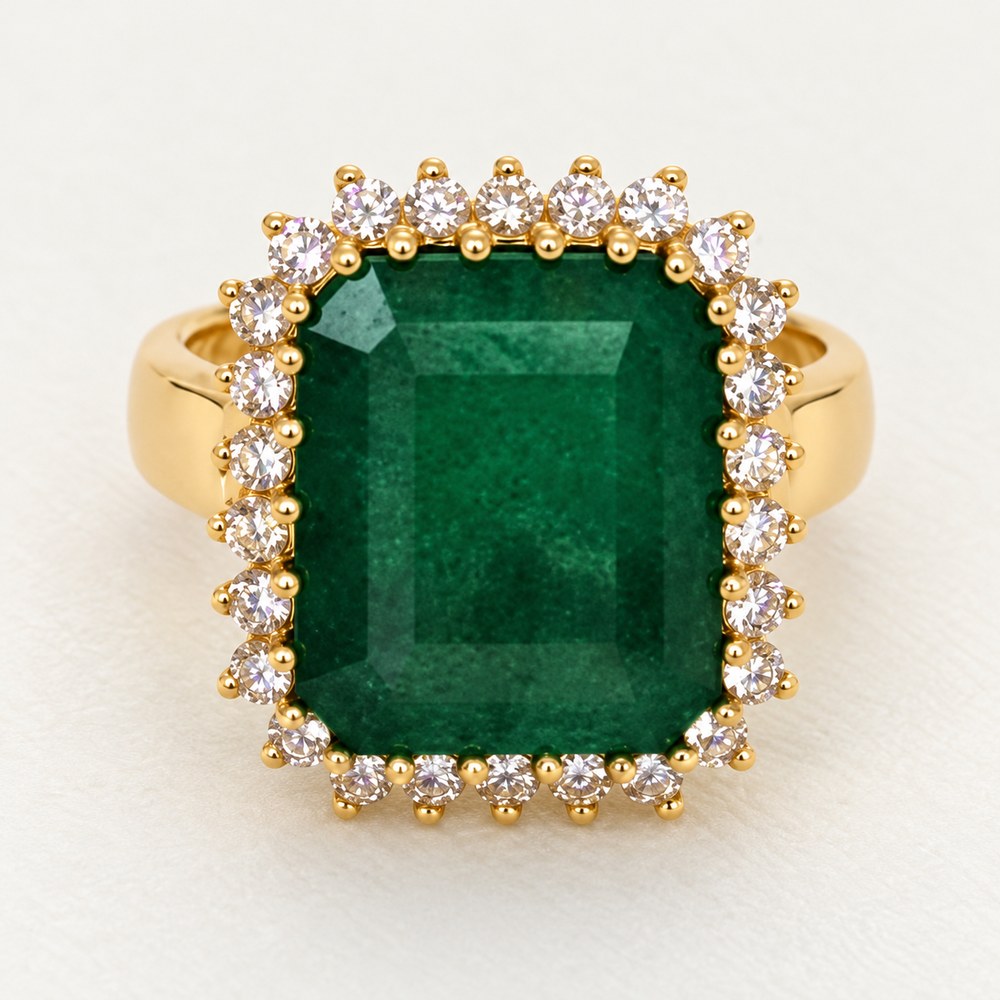
Our loose emerald search lists thousands of natural emeralds by shape, size, color, treatment and origin, and we can design a ring, pendant or earrings around the stone you choose.
Ask about emeralds Browse emeralds Book a video consultation
Sources
- GIA (Gemological Institute of America), Gem Encyclopedia: Emerald, and GIA guidance on emerald clarity enhancement and care.
- Laboratory Manual Harmonisation Committee (LMHC), Information Sheets on emerald and on clarity enhancement of emerald.
- Federal Trade Commission, Guides for the Jewelry, Precious Metals, and Pewter Industries, on disclosure of gemstone treatments.
This guide is for education only. Laboratory terminology and testing methods change; check the issuing laboratory's own website to verify any report.